
Advantages and limits of drone spraying versus conventional methods, and a checklist for correct application.
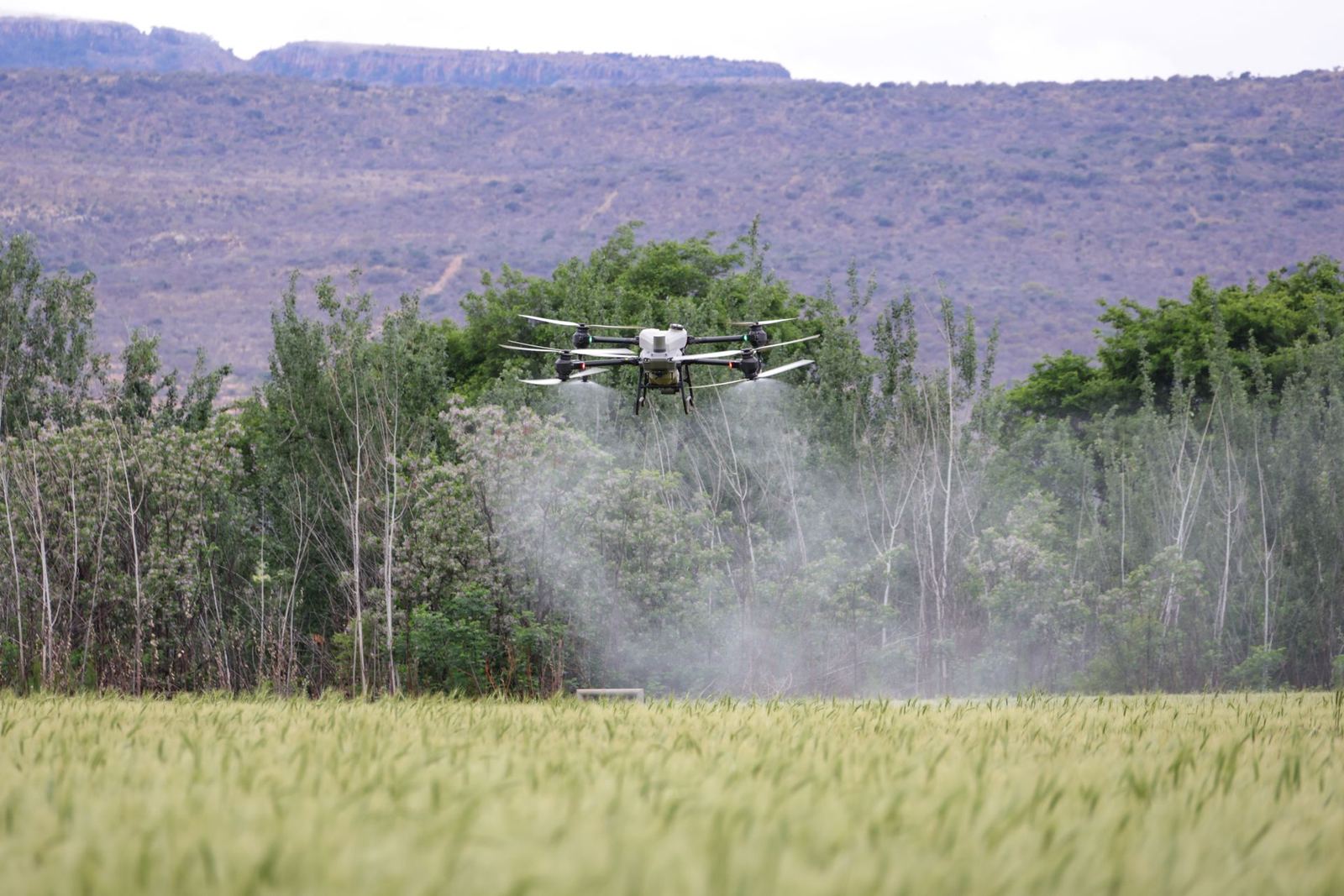
Agricultural drones are spreading rapidly in Türkiye, particularly for cotton, maize, sunflower, vineyards and orchards. Speed, low water use and the ability to work in wet fields are the biggest advantages for growers. But a drone can underperform if used incorrectly.
Advantages
- Speed: a 40-litre drone applies up to 100 decares an hour.
- Water saving: 1–2 litres of water per decare versus 20–30 litres conventionally.
- No soil compaction: no tractor enters the field, so muddy or sloping land can be treated.
- Operator safety: the applicator has no contact with chemicals.
Limits
Because drone spraying uses small droplets, it is sensitive to wind. Above 4 m/s the drift risk rises. In dense canopies (for example multi-tier vines) coverage may be insufficient, in which case flight height and nozzle settings are changed.
Points of attention
- Use only plant protection products registered by the Ministry of Agriculture and Forestry, at label dose.
- Define buffer zones for neighbouring parcels, beehives and water sources.
- Application temperature should not exceed 30 °C; early morning and evening are preferred.
- Choose droplet size to suit the product (50–400 microns).
- Keep a wind, temperature and humidity log for every flight.
Cost comparison
Drone application costs 95–140 TRY per decare. Considering savings in water, labour, fuel and time, large parcels reach a total cost close to or lower than conventional methods. The real difference is timing: covering all land within the critical 48-hour window directly affects yield.
Smart application with NDVI
An NDVI map from a mapping drone shows stressed zones. A prescription map then applies a higher dose to those zones and a lower dose to healthy ones. In our experience this reduces product use by 12–20%.
To plan your season calendar together, you can book an agricultural application planning call.
Season planning
Drone spraying capacity fills up fast in the critical weeks of the season. Setting the application calendar at the start of the season for crops such as cotton, maize and vineyards secures product and aircraft planning. For cooperatives and contract farming, block bookings earn an additional discount.
Related Posts
Thermal Drone Inspection of Solar Plants: How Hot Spots Are Found and What They Save
How thermal drone scanning works, which faults it finds and the estimated cost of efficiency loss.
Read More